The Brutal Reason Your Google Business Profile Is Stuck on Page Two
The Brutal Reason Your Google Business Profile Is Stuck on Page Two
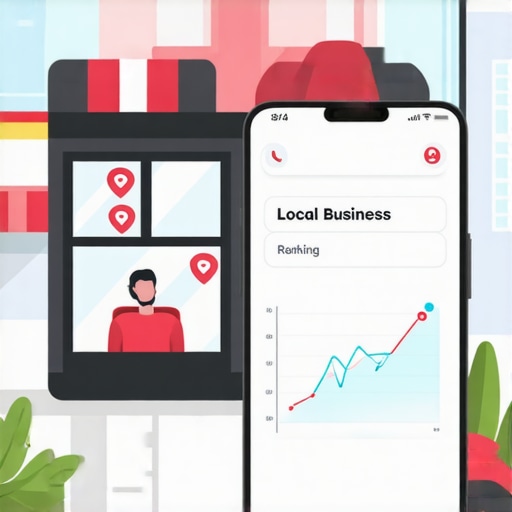
Let’s be blunt: Page two of Google Maps is the digital equivalent of a ghost town. It is where local businesses go to die quietly while their competitors in the Top 3 “Map Pack” feast on 70% of the available clicks. If you are reading this, you’ve likely spent months – perhaps years – optimizing your profile, hunting for reviews, and posting updates, only to find yourself perpetually stuck at position #11 or #14.
You’re frustrated. You feel like you’ve done everything “by the book.” But as a Google Business Profile Product Expert who has spent decades in the trenches of local search, I can tell you the “book” most people are reading is outdated, oversimplified, and ignores the brutal reality of how Google’s algorithm actually functions in 2026.
In the current landscape, google business profile seo is no longer just a marketing checkbox; it is a complex infrastructure project. In 2026, Google’s AI-driven enforcement is more aggressive than ever. If your profile is stuck on page two, it isn’t because you lack a few reviews. It’s because your local search infrastructure is fundamentally broken. Google’s local results are governed by three primary pillars: Relevance, Distance, and Prominence. If you aren’t in the Top 3, you are failing in at least two of those categories.
The “Infrastructure” Problem: Why Your Profile is Built on Sand
Most business owners treat their Google Business Profile (GBP) as a “set it and forget it” digital flyer. They fill out the name, add a phone number, and maybe upload a few photos of their office dog. This is the first and most “brutal” reason for failure: Misalignment of infrastructure.
Google’s algorithm doesn’t “read” your profile the way a human does; it parses data points to determine relevance. The most common infrastructure failure I see is the incorrect application of categories and services. If your primary category is slightly off, or if your service list doesn’t match the “Neural Matching” patterns Google expects for your industry, you are invisible. You might think you are a “Contractor,” but Google might see the local market demand specifically for “Kitchen Remodeler.”
Research consistently shows that “Wrong categories” and “Missing services” are the top reasons for optimization failure. Without a precise google business profile optimization strategy, you are essentially asking Google to guess what you do. In 2026, Google doesn’t guess – it ignores. If your infrastructure is built on sand, no amount of “hacks” will save you.
The Proximity Paradox: Why Being “Near” Isn’t Enough
One of the most common complaints I hear is: “Tim, I am literally the closest business to the user searching, so why is my competitor three miles away ranking higher than me?”
This is the Proximity Paradox. While distance is a core ranking factor, it is often overridden by relevance and prominence. Google’s goal is to provide the best answer, not necessarily the closest one. If a business three miles away has a higher “Prominence” score – meaning better local citations, stronger website authority, and more consistent engagement – Google will gladly bypass your front door to send a customer to them.
I’ve written extensively on Why Being the Closest Business Still Isn’t Getting You the Phone Call. The brutal truth is that proximity is a fixed factor you cannot control, but relevance and prominence are variables you can manipulate. If you are stuck on page two, your proximity is being neutralized by a competitor’s superior digital footprint.
The 2026 Suspension Wave: AI Enforcement and Policy Triggers
We are currently witnessing what I call the “2026 Suspension Wave.” Google has moved away from manual reviews for the vast majority of profile changes and has handed the keys to AI-driven enforcement bots. These bots are trained to look for patterns of “suspicious behavior.”
If you are in a high-scrutiny niche – such as local seo for contractors, plumbers, HVAC, or locksmiths – the margin for error is zero. A simple change to your business hours or a slight tweak to your business name can trigger an immediate suspension. Google is prioritizing “user experience” by nuking profiles that look even slightly non-compliant.
The “brutal” reality is that many businesses are stuck on page two because they have “soft flags” on their accounts. They aren’t suspended yet, but Google has “throttled” their visibility because the AI doesn’t fully trust the data. This often happens when there is a mismatch between your GBP data and your “NAP” (Name, Address, Phone) consistency across the web. If your website says one thing and your profile says another, the AI defaults to the safest option: hiding you on page two.
The Prominence Gap: Beyond the Star Rating
Many business owners believe that “more reviews = higher rankings.” If that were true, the oldest business in town would always be #1. In reality, Google looks at the quality, velocity, and engagement of those reviews.
If you have 500 reviews but your last one was from six months ago, your “Review Velocity” is zero. Google views this as a business that may no longer be active or relevant. Furthermore, if you aren’t responding to reviews with keyword-rich, helpful context, you are missing a massive prominence signal.
This leads to what I call The Impression Trap: Why Your Google Business Growth Isn’t Resulting in Leads. You might see your “Views” going up in the dashboard, but if those views don’t convert into clicks, Google interprets your profile as “unhelpful” for that specific search query. To bridge this gap, many high-performing agencies utilize a professional google maps ranking service to ensure every prominence signal – from review responses to local geo-signals – is firing correctly.
Technical “Levers” You’re Failing to Pull
To rank google business profile listings effectively, you have to understand the technical levers available to you. Moz and other major SEO research bodies have identified roughly 11 known fields in the GBP dashboard that directly impact rankings. If you are on page two, you are likely failing at these three:
- Primary Category: This is the single most important lever. If you are a plumber who also does HVAC, but 80% of your revenue comes from HVAC, yet your primary category is “Plumber,” you will never rank for the high-value HVAC terms.
- Business Title: While keyword stuffing is a violation of Terms of Service, the “brutal” truth is that businesses with keywords in their names often outrank those without them. The key is to balance branding with legal “DBA” (Doing Business As) names that reflect what you actually do.
- Website Authority: Your GBP is not an island. It is tethered to your website. If your website has poor “Local Business Schema,” slow load times, or zero local backlinks, your GBP will suffer. You can’t have a #1 ranking on Maps with a #50 ranking on organic search.
I often suggest that businesses How to Rank Higher on Google Maps Without Buying a Single Backlink by focusing on these internal technical levers first. To see exactly where you stand, using a google maps rank tracker is essential to see how these changes affect your “grid” position across different neighborhoods.
Competitor Awareness: How to Audit the Top 3
If you want to beat the Top 3, you have to stop looking at your own profile and start dissecting theirs. What do they have that you don’t? Often, it isn’t more reviews. It’s “Hyper-local mentions.”
Are they mentioned on the local Chamber of Commerce site? Do they have “City Pages” on their website that are perfectly optimized for the local neighborhood? Do they use Local Business Schema to tell Google exactly where their service area boundaries are?
I recommend checking out 3 Competitor Research Tactics to Reclaim Your Number One Map Spot. You’ll often find that the “winners” aren’t doing more work; they are doing more specific work. They are filling the “data gaps” that Google’s AI is hungry for. If you find your competitors are ranking with significantly fewer reviews, it’s a clear sign that their technical “Relevance” score is vastly superior to yours. This is why many businesses see a massive jump when they switch to SEO Viper Tools to automate the identification of these competitor gaps.
Action Plan: Breaking the Page Two Curse
If you are ready to stop settling for the scraps on page two, you need a systematic approach. You cannot “guess” your way into the Map Pack. Follow this checklist to begin your ascent:
- Audit Your Categories: Use a tool to see what categories your Top 3 competitors are using. If they all have a secondary category you’re missing, add it immediately.
- Clean Up Your NAP: Ensure your Name, Address, and Phone number are identical across your website, Facebook, Yelp, and the BBB. Even a “St.” vs “Street” discrepancy can cause a trust drop in Google’s AI.
- Optimize for 2026 Trends: Stay ahead of the curve by understanding The Core Local SEO Trends for 2026 That Service Pros Can’t Ignore, specifically the move toward “Video Verification” and “Entity-based search.”
- Automate the Heavy Lifting: Local SEO is a game of consistency. Use local seo tools to monitor your rankings daily and track your progress.
- Implement Local Schema: Don’t just tell Google you’re a local business; prove it with JSON-LD code on your website that links directly to your GBP CID number.
Conclusion: The Brutal Truth
The brutal reason your Google Business Profile is stuck on page two is that you are likely playing a 2018 game in a 2026 environment. Google doesn’t owe you a ranking because you’ve been in business for twenty years or because you have a 4.9-star rating. In the eyes of the algorithm, you are simply a collection of data points. If those points don’t form a picture of high relevance, close proximity, and undeniable prominence, you will remain in the shadows.
Page two is where local businesses go to die. But it doesn’t have to be your permanent home. By fixing your infrastructure, closing the prominence gap, and using the right technical levers, you can break the curse.
Stop guessing and start auditing. Perform a comprehensive google business profile audit today to identify the specific “soft flags” holding you back. Or, if you’re tired of fighting the algorithm alone, contact Tim Capper for a professional consultation. The Map Pack is waiting – but only for those willing to face the brutal reality of what it takes to get there.