Spotting the Gaps in Your Local Rank with a 10-Minute Map Audit
Spotting the Gaps in Your Local Rank with a 10-Minute Map Audit
In the world of local search, there is a massive difference between “ranking” and “winning.” As a technical SEO consultant, I frequently speak with business owners who are frustrated. They tell me, “Dan, I’m ranking on the first page!” But when we look closer, they are sitting at position #4 or #5 – just outside the coveted Google Map Pack. In local search, being #4 is often equivalent to being invisible. Research consistently shows that the top three results in the Map Pack capture approximately 70% of the total click-through rate, leaving the “More Businesses” button to collect dust.
If you aren’t seeing the call volume you expect, you likely have “ranking gaps” – blind spots where your visibility drops off or your profile fails to convert. The good news is that you don’t need a week-long deep dive to identify these issues. You need a google business profile audit that focuses on high-impact data points. In just ten minutes, you can diagnose why your competitors are eating your lunch and what steps you need to take to reclaim your territory. This is the exact process I use to help service-based businesses like plumbers, lawyers, and dentists turn a stagnant profile into a lead-generation machine.
Why Your Ranking Doesn’t Always Equal Revenue
The biggest misconception in local SEO is that ranking is a static, binary state. Business owners often check their rank while sitting in their own office, see themselves at #1, and assume they are dominating the market. This is a dangerous trap. Google’s local algorithm is built on a “triangle” of factors: Proximity, Relevance, and Prominence. Of these, proximity is the most volatile. You might be the king of your office building, but disappear entirely two blocks away.
This is why Why Being the Closest Business Doesn’t Guarantee You the Phone Call is a critical concept to understand. If your relevance or prominence is weak, Google will favor a business further away that has better authority and clearer signals. Most users never click “More Businesses.” If you aren’t in that initial view, you don’t exist to them. A successful google business profile audit identifies where your prominence fails to overcome the distance factor, allowing you to target specific neighborhoods where you are currently losing out on revenue.
The 10-Minute Audit: Step 1, The Proximity & Intent Check
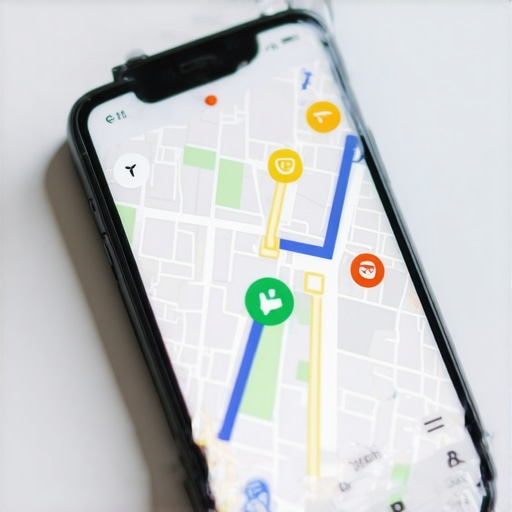
The first step of your audit is to stop looking at your ranking as a single point on a map. You need to visualize your “ranking footprint.” To do this effectively, you must move beyond manual searches and utilize a google maps rank tracker. These tools provide a grid-based view of your performance across an entire city or service area.
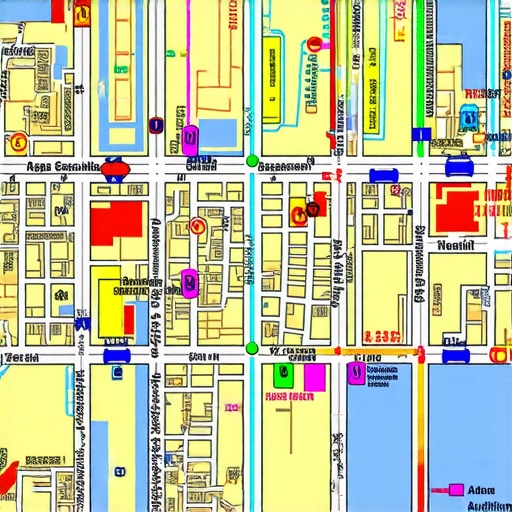
When you look at a grid, you are looking for “ranking cliffs.” A ranking cliff occurs when you rank #1 or #2 in a tight circle around your business, but immediately drop to #10 or #20 just a mile away. This indicates a lack of geographical relevance. If you are a service-area business (SAB), this is often where the trouble starts. You might find that Why Your Service Area Map Is Scaring Away Local Leads because your service boundaries are either too broad or poorly defined in the eyes of the algorithm. Using local seo ranking tools to see this data visually is the only way to understand the true “intent” of the local searchers in your area. If the grid is mostly red (low ranking) outside of your immediate street, your prominence signals are likely the culprit.
Step 2, Auditing Your Google Business Profile Core Data
Once you understand where you are failing to rank, you need to look at the “Big Three” of your profile data: your Primary Category, Business Name, and Website Link. This is the foundation of google business profile seo.
First, check your primary category. This is the single most important ranking signal on your profile. If you are a personal injury lawyer but your primary category is set to “Law Firm,” you are competing in a much broader, more difficult pool than necessary. You need to be specific. Second, look at your business name. While I strongly advise against blatant keyword stuffing – which can lead to a suspension – ensuring your name is accurate and consistent is vital. Why Mismatched Business Info is Quietly Killing Your Google Maps Visibility is a common issue where slight variations in your Name, Address, and Phone number (NAP) across the web confuse Google’s crawlers, leading to a drop in trust and ranking.
Finally, ensure your website link points to the most relevant page. If you have multiple locations, each profile should link to its specific location landing page, not the homepage. This is a core part of google business profile optimization. If you haven’t touched these settings in months, a quick refresh can often trigger a positive movement in the local map pack seo. You can use specialized google business profile optimization tools to ensure your data is perfectly synced and optimized for current algorithm standards.
Step 3, The Visual Trust & Sentiment Audit
Ranking gets you seen, but your “visual trust” gets you called. During your google business profile audit, you must look at your profile through the eyes of a skeptical customer. This involves two main components: Review Sentiment and Action Photos.
It is no longer enough to have a 4.5-star rating. Google’s AI now analyzes the “sentiment” within reviews. Are customers using keywords related to your services? Are they mentioning specific locations? If your reviews are generic (“Great service!”), they provide less ranking weight than specific reviews (“Best emergency plumber in Chicago who fixed my burst pipe quickly”).
Furthermore, your photos are a massive conversion factor. Data shows that How Real Action Photos Outperform Stock Images for Inbound Phone Leads. If your profile is filled with generic stock photos of people shaking hands, you are bleeding leads. You need “proof of work” photos – your branded trucks, your team in the field, and the finished results of your projects. These photos build immediate trust and are often the deciding factor for a mobile user who is scrolling quickly through the Map Pack.
Step 4, The Mobile Conversion Path (The “Call” Test)
Nearly 60% of local searches happen on a mobile device, and for service-based industries, that number is often higher. If your profile looks great on a desktop but fails on a phone, your audit isn’t finished. You need to perform the “Call Test.”
Open your profile on a mobile device. Is the “Call” button front and center? Does the phone number use a local area code, or a cold 800-number? (Local numbers generally perform better for local trust). We have seen many instances Why Your Phone Icon is Ghosting Leads: 3 Mobile Fixes [2026] because of simple technical glitches or incorrect secondary numbers. If a user clicks that button and it doesn’t immediately initiate a call, or if it leads to an automated menu that is too long, they will bounce back to the Map Pack and call your competitor.
To really improve google maps ranking and conversion, you should also look at 7 GMB Tactics That Force More 2026 Local Business Calls, such as enabling Google Messages (if you can respond quickly) and utilizing the “Booking” feature. These direct-response tools bypass the need for a user to even visit your website, shortening the distance between a search and a sale.
Advanced 2026 Tactics: AI and Attributes
As we look toward the future of local search, the google business profile audit must evolve. By 2026, AI-generated summaries will be the primary way users interact with Google Maps. Google will summarize your reviews, your website content, and your “Attributes” to tell the user exactly why they should choose you. These are called “sentiment triggers.”
Check your profile attributes. Are you marked as “Wheelchair accessible”? Do you “Identify as veteran-led”? Do you offer “Online appointments”? These attributes might seem minor, but they are the data points AI uses to filter results. If a user asks Google, “Find a woman-owned plumbing company near me,” and you haven’t checked that attribute box, you won’t appear, regardless of how many reviews you have. Staying ahead of The Core Local SEO Trends for 2026 That Service Pros Can’t Ignore requires you to be meticulous with these small details. This is how you increase google business profile visibility in an era where search is becoming more conversational and specific.
Summary Checklist for Your Map Audit
To make this actionable, here is your 10-minute checklist. Run through these steps once a month to ensure you aren’t leaving money on the table:
- Grid Check: Use a google maps rank tracker to identify “ranking cliffs” in your service area.
- Category Verification: Ensure your Primary Category is the most specific possible match for your highest-revenue service.
- NAP Consistency: Verify that your name, address, and phone number match your website and top citations exactly.
- Review Audit: Respond to recent reviews and look for “sentiment keywords” that you can encourage future customers to use.
- Photo Refresh: Delete one stock photo and upload three “action” photos of your team or recent work.
- Attribute Update: Fill out every single attribute available to your business type to feed the AI search filters.
- Mobile UX: Click your own “Call” and “Website” buttons on a smartphone to ensure a frictionless path to conversion.
- Conversion Optimization: Review How to Stop 2026 Map Searchers From Skipping Your Call Button to ensure your CTA is as strong as possible.
Conclusion: From Visibility to Velocity
Local SEO isn’t a “set it and forget it” strategy. The map is constantly shifting as new competitors enter the market and Google updates its algorithms. A google business profile audit is your early warning system. It tells you when your prominence is fading and when your proximity is being challenged. By spending just ten minutes identifying these gaps, you move from merely being “visible” to having “velocity” – the speed at which searchers turn into callers.
If you find that your audit reveals deep-seated issues – like a stubborn ranking cliff or a total lack of mobile engagement – it may be time to leverage professional local seo software to automate your monitoring and optimization. The goal is simple: get more calls from google maps. Don’t let your business be the one that people skip over. Audit your profile, close the gaps, and start winning the Map Pack today.