Why Your Business Is Stuck at Number 4 on Google Maps and How to Break Into the Top 3
Why Your Business Is Stuck at Number 4 on Google Maps and How to Break Into the Top 3
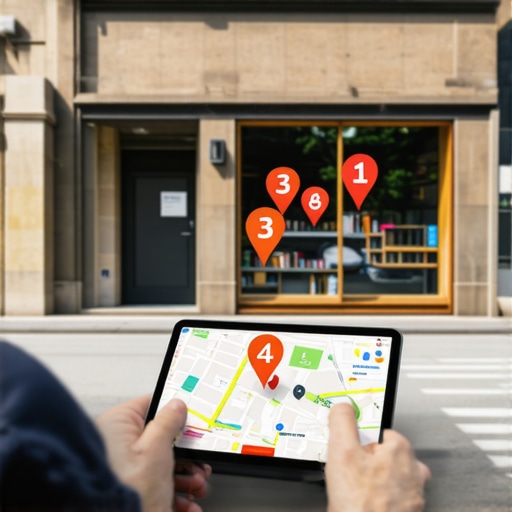
There is perhaps no greater frustration in the world of local marketing than searching for your primary service and seeing your business sitting at number four. You are right there. You can practically taste the lead volume, yet you are separated from the “money spot” by a single, agonizing position. In the world of google business profile seo, the difference between rank #3 and rank #4 isn’t just one spot – it is a canyon. This is the divide between the “Local Pack” (the top three results displayed prominently on the main search results page) and the “Local Finder” (the “More Places” list that requires an extra click).
The data is unforgiving: over 75% of users never scroll past the first three results on Google Maps. If you are at #4, you are effectively invisible to three-quarters of your potential customers. You have done enough right to beat out dozens of other competitors, but you are missing the final “infrastructure” pieces required to break the glass ceiling. As a Local SEO Consultant who has audited thousands of profiles, I can tell you that being stuck at #4 is rarely a matter of bad luck. It is a symptom of technical filters or optimization gaps that Google uses to decide who is truly worthy of the podium.
The Psychology of #4: Why “Almost” Is Costing You Thousands
Being ranked at #4 is a psychological trap. It feels like you are “almost there,” so many business owners simply wait, hoping that one more five-star review will provide the nudge they need. However, Google’s algorithm doesn’t work on a linear “points” system where more reviews always equal a higher rank. In many cases, Why Your Map Ranking Stalls Even When You Have More Reviews Than Competitors is due to the fact that Google views the Top 3 as a curated “trust set.”
The Top 3 acting as a trust signal cannot be overstated. When a user sees three businesses highlighted with map pins, stars, and contact buttons, they subconsciously assume these are the “vetted” options. The fourth result, hidden behind a click, is perceived as the “alternative” or the “runner-up.” This perception translates directly into click-through rates (CTR). A business at #3 might receive 15% of the total clicks for a keyword, while the business at #4 drops to less than 3%.
If your business is generating 20 calls a month at rank #4, breaking into the Top 3 could easily skyrocket that number to 60 or 80 calls without any additional ad spend. You are currently paying the “invisible tax” of local search. Understanding Why Your Competitors Are Getting the Calls Your GMB Ranking Deserves is the first step in reclaiming that lost revenue. You aren’t just fighting for a number; you are fighting for the trust signal that Google grants to its elite tier of local businesses.
The Three Pillars of Google Maps Ranking: Relevance, Distance, and Prominence
To move from #4 to #1, we must look at the foundation. Google officially states that local results are based primarily on three factors: Relevance, Distance, and Prominence. If you are stuck at #4, you likely have a “leak” in one of these pillars.
- Relevance: This is how well your google business profile optimization matches what someone is searching for. If someone searches “emergency plumber” and your profile only mentions “plumbing services,” you may be relevant, but not specifically relevant. Google uses your categories, your business description, and even the content on your linked website to determine this.
- Distance: This is the proximity of your business location to the searcher or the search terms. While you cannot move your building, you can influence how Google perceives your “service area” and “authority radius.”
- Prominence: This is a measure of how well-known your business is. Google looks at your “offline” fame and translates it into “online” signals. This includes your review count, the quality of your backlinks, and your mentions in local news or directories.
According to Google’s official documentation, “Prominence is also based on information that Google has about a business, from across the web, like links, articles, and directories.” This is where many businesses fail. They focus entirely on their profile while ignoring their wider digital footprint. As Rashid Rehman famously noted, “Local SEO isn’t marketing. It’s infrastructure.” You need to build a digital structure that proves to Google you are the most prominent option in your niche. Utilizing professional local seo tools can help you measure these pillars against your competitors to see exactly where the gap lies.
4 Technical Reasons You’re Stuck at #4 (And How to Fix Them)
If you have great reviews and a solid profile but can’t crack the Top 3, the issue is likely technical. Here are the four most common “silent killers” of local rankings.
1. The “Possum” Filter & Multi-Tenant Issues
In 2016, Google rolled out an update nicknamed “Possum.” One of its primary functions was to filter out businesses that are located in the same building or very close to one another if they share the same category. If you are a lawyer in a high-rise and there is another lawyer on a different floor who is ranked #2, Google may “filter” you out to #4 or lower to provide variety in the results. To fix this, you must differentiate your “digital signature.” Ensure your suite number is formatted uniquely, and focus on secondary categories that your neighbor isn’t using. If you feel your visibility has dropped suddenly, you might be Spotting the Gaps in Your Local Rank with a 10-Minute Map Audit to see if a nearby competitor is “cannibalizing” your proximity score.
2. Category Dilution
More is not always better. Many businesses think that by adding 10 different categories to their Google Business Profile, they will show up for more searches. In reality, this often leads to “category dilution.” Google’s algorithm wants to see a clear, primary focus. If you are a “Personal Injury Attorney” but you also list “Estate Planning,” “Criminal Defense,” and “Notary Public,” you are weakening your relevance for your primary high-value keywords. Audit your categories and ensure your primary category is the one that drives the most revenue. For those struggling with this, a professional google maps ranking service can perform a competitive analysis to find the “sweet spot” of category selection.
3. The Sentiment Gap
Google’s AI (Natural Language Processing) now reads your reviews to understand the sentiment and keywords inside them. If your competitors have reviews that say, “Best 24-hour AC repair in Phoenix,” and your reviews just say, “Great job,” the competitor will win on relevance. You need “keyword-rich” reviews. Encourage your customers to mention the specific service they received and the neighborhood they are in. This bridges the gap between a generic “good business” and a “highly relevant local authority.” This is one of the 7 GMB Tactics That Force More 2026 Local Business Calls that most people overlook.
4. Website-to-Map Disconnect
Your Google Business Profile does not exist in a vacuum. It is tethered to the URL you link in the “Website” field. If your website is slow, not mobile-friendly, or lacks local signals (like an embedded map or local schema), it will drag your map ranking down. Google uses your website’s organic authority to bolster your map prominence. If your website isn’t optimized for the same keywords as your map profile, Google gets “confused” about your true specialty. You must ensure your landing page has localized headers, geo-tagged images, and clear NAP (Name, Address, Phone) consistency that matches your profile exactly.
Advanced Tactics for 2026: Moving the Needle
As we head toward 2026, the local search landscape is becoming more visual and AI-driven. To move from #4 to #1, you need to adopt “future-proof” tactics that your competitors are likely ignoring.
Hyperlocal Content Marketing: Stop writing generic blog posts. Write about specific neighborhood events, local landmarks, and community projects. Mentioning your proximity to the “Main Street Plaza” or “Central Park” helps Google’s AI associate your business pin with those specific geographic coordinates, expanding your “Distance” pillar. This is a core component of modern google business profile seo.
Image Optimization & Visual Search: Google is increasingly using “Cloud Vision” to “read” the photos you upload. Stop using stock photos. Upload high-resolution, original photos of your team in action, your branded trucks, and your physical storefront. When Google’s AI sees your logo and your equipment in the real world, it confirms your business’s legitimacy and prominence. Furthermore, check for How ‘In-Stock’ GMB Badges Drive a 2026 Call Increase [Tested]; if you are a retail business, showing real-time inventory can be the “X-factor” that pushes you into the Top 3.
Engagement Metrics: Google tracks how people interact with your listing. Do they click “Call”? Do they ask for directions? Do they spend time reading your “Update” posts? High engagement signals to Google that your listing is helpful. Use SEO Viper Tools to track these interactions. If you find that users are viewing your profile but not calling, you likely have a conversion issue (bad photos or missing info) that is preventing you from reaching that #1 spot. Understanding The Hidden Map Metrics That Actually Tell You If the Phone Is About to Ring is vital for long-term growth.
The 10-Minute Google Business Profile Audit Checklist
Before you hire a consultant, run through this quick audit to identify the low-hanging fruit. Often, a few small tweaks are all it takes to jump from #4 to #3.
- NAP Consistency: Is your Name, Address, and Phone number 100% identical on your profile, your website footer, and your Facebook page? Even a “St.” vs “Street” discrepancy can cause issues.
- Primary Category Check: Does your primary category match the #1 ranked competitor? If not, you are fighting an uphill battle.
- Recent Posts: Have you posted a “Google Update” in the last 7 days? Freshness is a ranking signal.
- Q&A Section: Have you populated your own Q&A section with common customer questions? This is prime real estate for keyword relevance.
- Review Responses: Are you responding to every review (both positive and negative) within 24-48 hours?
- Attribute Accuracy: Have you selected all relevant attributes (e.g., “Black-owned,” “Veteran-led,” “Wheelchair accessible”)?
If you find that your profile is already perfect but you’re still stuck, you may need a more advanced google business profile audit tool to look at your “backlink profile” and “citation velocity.” Sometimes the problem isn’t on your profile; it’s the lack of authority pointing to it.
Conclusion: Breaking the Glass Ceiling of Local Search
Ranking at #4 is a sign that you are doing 90% of the work correctly. You have a legitimate business, you have gathered reviews, and you have optimized your basic information. However, Google reserves the Local Pack for businesses that demonstrate the highest levels of relevance, distance, and prominence. To break into that Top 3, you must move beyond basic “marketing” and focus on the technical “infrastructure” of your local presence.
Don’t let your business stay invisible to 75% of your market. Audit your “Possum” filter risk, refine your categories, and start generating keyword-rich sentiment in your reviews. If you’re ready to stop being “almost” successful and start dominating your local area, consider partnering with a google maps ranking service to handle the technical heavy lifting. The view from the Top 3 is much better – and a lot more profitable.